Menu

Subtitle Indonesia Film Role Play Korea 2012 [LATEST]

Example: A scene of awkward flirtation in a Korean coffee shop (a cramped, deliberate distance) becomes a market flirtation in which two characters barter together, laughing as they haggle the price of rambutan — their banter doubling as intimacy. The director leans into local palettes: saffron batik, damp concrete, fluorescent signage in Indonesian script. Framing borrows from the Korean indie’s intimacy—tight close-ups and long takes—but inserts aerial shots of Jakarta’s overpasses to emphasize scale and congestion. The soundtrack mingles lo-fi guitar riffs from the Korean score with traditional angklung motifs and modern Indonesian indie bands, creating an aural bridge between the two cultures.

Example: A scene where the Korean lead nurses a cigarette outside a convenience store becomes Ardi sharing sweet, bitter kopi tubruk with a stranger beneath the awning of a 24-hour warung, their hands warmed by aluminum cups instead of nicotine. Subtitles do more than translate words; they carry tone, context, and comedic timing. In the Indonesian roll-out, the translators choose to preserve the original’s elliptical pauses but add brief cultural notes inside the flow — not heavy footnotes, just the right word choices that conjure local life. Subtitle Indonesia Film Role Play Korea 2012

Example: A montage of the protagonist moving through the city is scored with a track that begins with a soft Korean guitar loop, then overlays a simple angklung pattern and finally a bassline from a Jakarta bedroom-pop group, signaling cultural fusion. Core themes—alienation in dense urban life, fragile human connections, quiet moral choices—survive the translation but wear different clothes. Family duty might tilt toward multigenerational expectations in Indonesia, while socioeconomic pressures map onto local realities: precarious informal labor, commuting chaos, and neighborhood hierarchies. Example: A scene of awkward flirtation in a

The projector hums to life in a cramped Jakarta screening room. Fluorescent light from the exit sign traces the aisle as the audience leans forward; tonight’s program is an unusual experiment — an Indonesian-language reimagining of a small, weathered Korean indie from 2012. The title card fades in, flickering in Bahasa, and the first scene snaps open like a polaroid. Opening: Transplanting Place and Tone In the Korean original, a rainy alley in Seoul cradles a chance meeting. In this Indonesian version, rain becomes the saturated monsoon of late Jakarta — downpours that blur neon hawker lights into watercolor. The protagonist, originally a thirty-something office worker in Seoul, is recast as Ardi, a commuter who sells vintage cassette tapes at Pasar Senen. His coat smells faintly of fried tempe and the exhaust of Bajaj taxis; his tired smile carries the same careful reserve as the Korean archetype, but filtered through different cultural rhythms. The soundtrack mingles lo-fi guitar riffs from the

This narrative illustrates how a 2012 Korean indie can be reinterpreted through Indonesian language, setting, and social texture while preserving the emotional core — with role-play and subtitling as tools to make the story vivid and locally resonant.

Example: A scene of awkward flirtation in a Korean coffee shop (a cramped, deliberate distance) becomes a market flirtation in which two characters barter together, laughing as they haggle the price of rambutan — their banter doubling as intimacy. The director leans into local palettes: saffron batik, damp concrete, fluorescent signage in Indonesian script. Framing borrows from the Korean indie’s intimacy—tight close-ups and long takes—but inserts aerial shots of Jakarta’s overpasses to emphasize scale and congestion. The soundtrack mingles lo-fi guitar riffs from the Korean score with traditional angklung motifs and modern Indonesian indie bands, creating an aural bridge between the two cultures.

Example: A scene where the Korean lead nurses a cigarette outside a convenience store becomes Ardi sharing sweet, bitter kopi tubruk with a stranger beneath the awning of a 24-hour warung, their hands warmed by aluminum cups instead of nicotine. Subtitles do more than translate words; they carry tone, context, and comedic timing. In the Indonesian roll-out, the translators choose to preserve the original’s elliptical pauses but add brief cultural notes inside the flow — not heavy footnotes, just the right word choices that conjure local life.

Example: A montage of the protagonist moving through the city is scored with a track that begins with a soft Korean guitar loop, then overlays a simple angklung pattern and finally a bassline from a Jakarta bedroom-pop group, signaling cultural fusion. Core themes—alienation in dense urban life, fragile human connections, quiet moral choices—survive the translation but wear different clothes. Family duty might tilt toward multigenerational expectations in Indonesia, while socioeconomic pressures map onto local realities: precarious informal labor, commuting chaos, and neighborhood hierarchies.

The projector hums to life in a cramped Jakarta screening room. Fluorescent light from the exit sign traces the aisle as the audience leans forward; tonight’s program is an unusual experiment — an Indonesian-language reimagining of a small, weathered Korean indie from 2012. The title card fades in, flickering in Bahasa, and the first scene snaps open like a polaroid. Opening: Transplanting Place and Tone In the Korean original, a rainy alley in Seoul cradles a chance meeting. In this Indonesian version, rain becomes the saturated monsoon of late Jakarta — downpours that blur neon hawker lights into watercolor. The protagonist, originally a thirty-something office worker in Seoul, is recast as Ardi, a commuter who sells vintage cassette tapes at Pasar Senen. His coat smells faintly of fried tempe and the exhaust of Bajaj taxis; his tired smile carries the same careful reserve as the Korean archetype, but filtered through different cultural rhythms.

This narrative illustrates how a 2012 Korean indie can be reinterpreted through Indonesian language, setting, and social texture while preserving the emotional core — with role-play and subtitling as tools to make the story vivid and locally resonant.

Subtitle Indonesia Film Role Play Korea 2012 [LATEST]


  • Lal Kitab Ke Totke For Money

Lal Qitab Ke Vidyarthi

It is the matter of pleasure for the lovers of Lal Kitab that in order to continue the research on the profound study of Lal Kitab, the group called ‘Lal Qitab Ke Vidyarthi’ has been established. The sole purpose of this group is to propagate the knowledge of Lal Kitab in the mankind with proper awareness and implications.

As the name of the group suggests, all the members of this group are the students of Lal Kitab and will remain the same in the time to come.

This group was originated on 15th January, 2015. The credit for creating this group goes to Shri Haresh Pancholi Ji (Vidyarthi Lal Qitab) who is situated at Ahmedabad, Gujarat (India) and Shri Milkh Raj Baghla Ji who is situated at Chandigarh (from Fazilka), Punjab (India). The creation of this group is the result of their tireless efforts and thoughtfulness.

The prime and foremost objective of this group is to transliterate all the five parts of Lal Kitab into Hindi Script and to make it available to the people in general.

With this declaration, it is important for us to let you know that we do have the full respect for all the branches of Astrology and we never ever criticize any other branch of the Astrology. While keeping faith and respect for all the branches and scholars of the Astrology, we are working on the research work of the ‘Lal Kitab’.

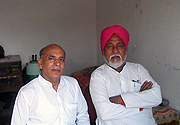
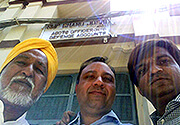
Photo Gallery


Subtitle Indonesia Film Role Play Korea 2012 [LATEST]

You can download very rare books on Astrology from the following links in both the languages viz. Hindi and Urdu.


Lal Kitab - Hindi Books

Subtitle Indonesia Film Role Play Korea 2012 [LATEST]

Lal Qitab Research Center

Simandhar Metro, Nr. Vishwas City-5, S.G.Highway, Gota, Ahmedabad,
Gujarat (India) - 382481.


Phone: +91 846 001 9009

E-Mail: astrologist75@yahoo.in


Contact Form